
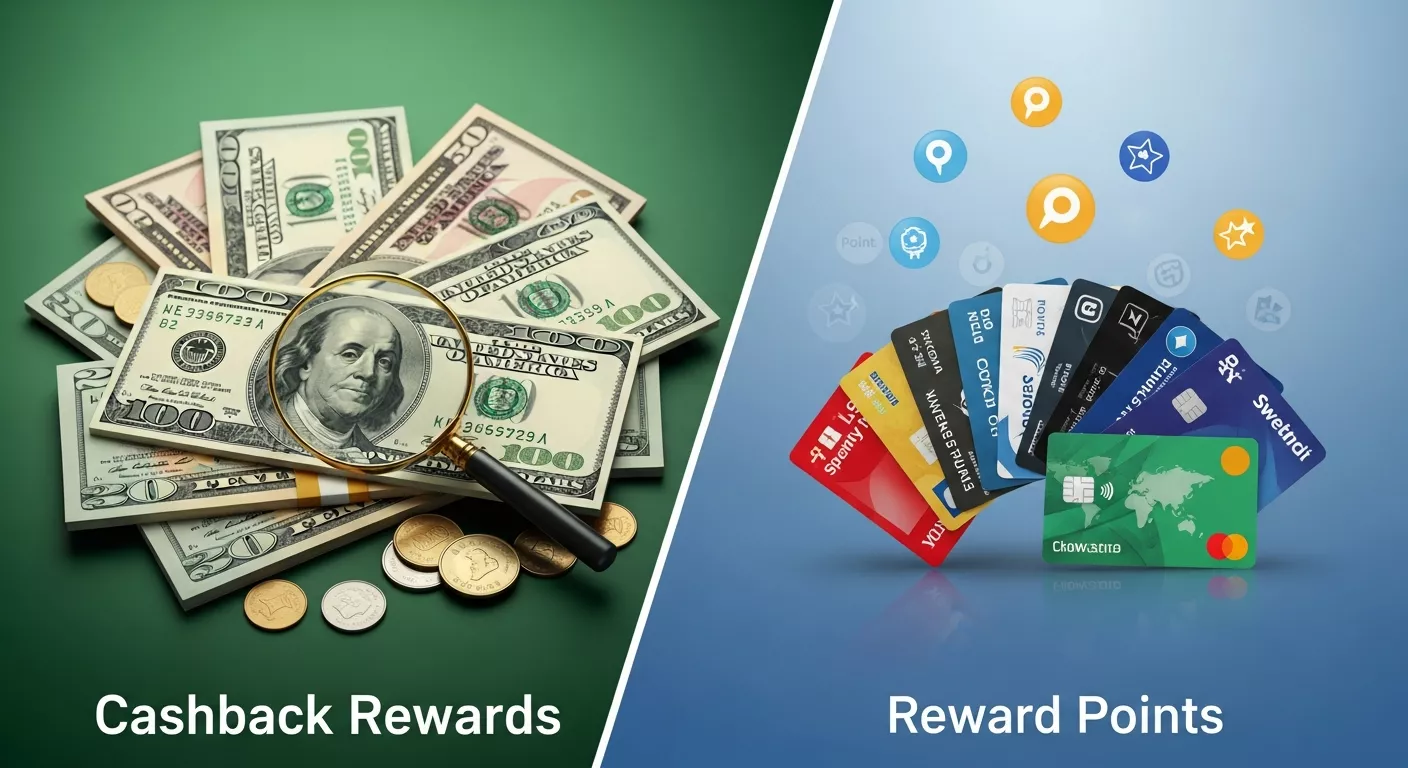
Cashback and reward points credit cards offer different benefits depending on your lifestyle. Cashback provides simplicity and flexibility, while points deliver higher travel value potential. Choosing the right option depends on your spending habits, financial goals, and willingness to manage reward systems.
Every time you swipe your credit card, you are making a choice. You are deciding not only what to buy, but how you want to be rewarded for that purchase. The credit card industry offers a dizzying array of incentives to earn your business, and these perks generally fall into two distinct categories. You can earn direct cash back on your spending, or you can accumulate points that you redeem later for travel, merchandise, or other experiences.
Choosing between these two options is a deeply personal financial decision. Your choice shapes how you travel, how you budget, and how you view your everyday expenses. A points-based card might fund your dream vacation to Europe, while a cashback card could help you offset the rising cost of groceries.
Understanding the mechanics of both systems is the key to maximizing your financial return. Credit card companies rely on consumer confusion. They create complex tiered systems and rotating categories to obscure the true value of their rewards. By learning exactly how these programs operate, you can take control of your spending strategy.
Understanding the Basics of Credit Card Rewards
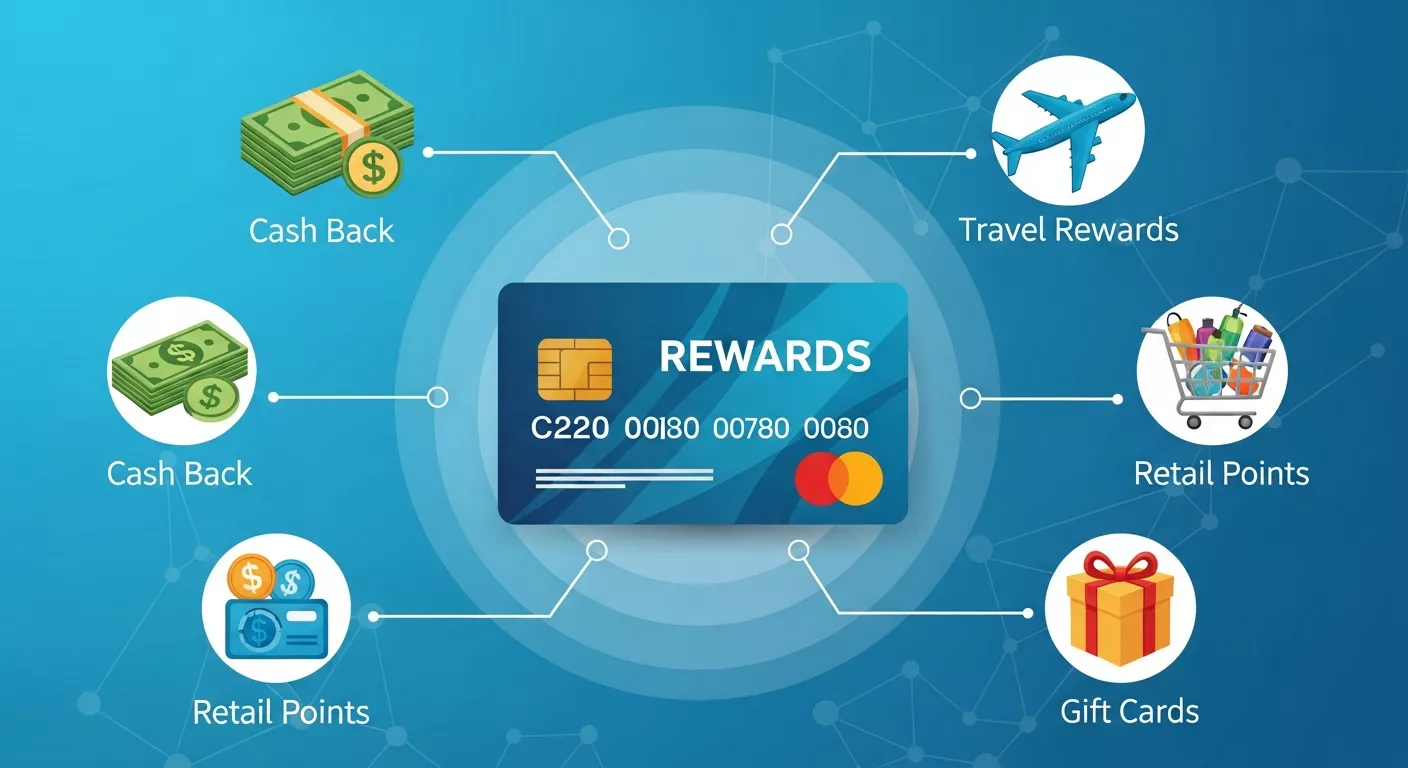
Before committing to a specific card, you need a foundational understanding of how credit card companies afford to give you these perks. Every time you make a purchase, the merchant pays an interchange fee to the credit card network. This fee typically ranges from 1% to 3% of the total transaction.
Credit card issuers take a portion of this fee and pass it back to you in the form of rewards. This system encourages you to use their card instead of cash or a competitor’s card. Therefore, when you use a debit card or cash, you are effectively subsidizing the rewards earned by credit card users.
To take advantage of this system, you must pay your balance in full every month. If you carry a balance, the interest charges will rapidly erase the value of any rewards you earn. A 2% cash return means nothing if you are paying 20% in interest. Assuming you manage your credit responsibly, rewards programs act as a direct discount on your lifestyle.
What Are Cashback Rewards?
Cashback is exactly what it sounds like. The credit card issuer refunds a small percentage of your eligible purchases back to your account. It is the most transparent and straightforward reward system available to consumers.
How Cashback Works
Most cashback cards operate on a percentage basis. A flat-rate card might offer 1.5% or 2% back on every single purchase you make. If you spend $1,000 in a month, you earn $20.
Other cards use tiered structures. You might earn 3% back at grocery stores, 2% at gas stations, and 1% on everything else. Finally, rotating category cards offer a high percentage—often 5%—on specific categories that change every quarter, such as restaurants in the first quarter and Amazon purchases in the second quarter.
Redeeming this cash is typically very simple. You can usually apply it as a statement credit to reduce your credit card bill, deposit it directly into a linked bank account, or request a physical check in the mail.
Pros of Cashback Credit Cards
The primary advantage of cashback is simplicity. You never have to worry about complex redemption portals, blackout dates, or point devaluations. A dollar is always worth a dollar.
Cashback also provides ultimate financial flexibility. You can use the money for literally anything. You can buy groceries, pay off a utility bill, or invest the funds into a brokerage account. During times of economic uncertainty, having liquid cash is far more valuable than holding a large balance of airline miles.
Furthermore, cashback cards generally charge lower annual fees. Many of the most competitive flat-rate and tiered cashback cards on the market cost absolutely nothing to hold year after year.
Cons of Cashback Credit Cards
The main drawback of cashback is the ceiling on value. Because the value is fixed, you cannot leverage your rewards for outsized returns. A 2% return will only ever be a 2% return.
Additionally, sign-up bonuses for cashback cards tend to be much lower than their travel point counterparts. A typical cashback sign-up bonus ranges from $150 to $300 after meeting a minimum spending requirement. While helpful, it rarely compares to the massive point bonuses offered by premium travel cards.
What Are Reward Points?
Reward points (or miles) are an alternative currency created by credit card companies, airlines, and hotel chains. Instead of cash, you earn units of this proprietary currency based on your spending.
How Reward Points Work
Like cashback, you earn a certain multiplier per dollar spent. A travel card might offer 3 points per dollar on flights and dining, and 1 point per dollar on all other purchases.
The complexity arises when you attempt to redeem these points. Point values fluctuate wildly depending on how you use them. Redeeming points for merchandise through a bank portal usually yields a poor return, often less than one cent per point. Booking travel through the issuer’s portal might offer a standard rate of one to one-and-a-half cents per point.
The greatest value is usually found by transferring points directly to airline or hotel partners. By finding available awards, skilled users can sometimes redeem points for three, four, or even five cents each, particularly when booking international business class flights or luxury hotel stays.
Pros of Reward Points Credit Cards
The defining benefit of reward points is their potential for outsized value. If you are willing to navigate award charts and remain flexible with your travel dates, points can unlock experiences that you might never justify paying for with cash.
Points cards also dominate the landscape of massive sign-up bonuses. It is common to see bonuses of 60,000 to 100,000 points. Depending on your redemption strategy, a single sign-up bonus can be worth well over $1,000 in travel value.
Many point-earning cards also include premium travel perks. These can include airport lounge access, travel insurance, free checked bags, and statement credits for services like Global Entry or TSA PreCheck. Learn more about Cashback Rewards Guide.
Cons of Reward Points Credit Cards
The biggest drawback to reward points is the time and effort required to maximize them. Learning how to transfer points, find award availability, and avoid airline fuel surcharges is practically a part-time job.
Points are also subject to inflation. Airlines and hotels frequently devalue their reward currencies by increasing the number of points required for a flight or a room. If you hoard points for too long, you might find they are worth significantly less when you finally go to use them.
Finally, the best reward cards almost always carry high annual fees. While the perks can justify the cost, paying $95 to $695 a year upfront requires you to actively use the card’s benefits to break even.
Head-to-Head Comparison: Cashback vs Points
To make an informed decision, we must evaluate both systems across a few critical dimensions.
Flexibility and Ease of Use
Cashback wins this category easily. You earn the money, and you spend it however you see fit. You never have to log into a portal to check if your desired airline has an open seat.
Points require a specific lifestyle to be useful. If you suddenly cannot travel due to a job change or a family emergency, a massive balance of airline miles becomes dead weight in your financial portfolio.
Valuation and Redemption Rates
Points offer a higher potential ceiling. A savvy traveler can stretch 50,000 points to cover a flight that would cost $1,500 in cash. That is a 3-cent-per-point valuation, which crushes a standard 2% cashback return.
However, cashback offers a higher floor. You will never accidentally redeem your cashback for a terrible rate. Point users who get frustrated and redeem their points for gift cards often end up getting a worse return than if they had simply used a free 2% cashback card.
Sign-Up Bonuses
Travel points typically win the sign-up bonus category. Banks view premium travel cardholders as highly profitable customers and are willing to take a loss upfront to acquire them. If your primary goal is to gather a large chunk of value quickly for an upcoming trip, a points card with a massive welcome offer is the optimal choice.
How to Choose the Right Strategy for Your Lifestyle

Your spending habits and personal goals should dictate your reward strategy. Consider the following common profiles.
The Frequent Flyer
If you travel multiple times a year, whether for business or pleasure, reward points are likely your best option. You can consistently utilize the travel protections, lounge access, and transfer partners. The annual fee of a premium travel card pays for itself through the perks you naturally consume.
The Budget Conscious Family
If your primary expenses are groceries, gas, and utilities, and your main financial goal is saving money, cashback is the clear winner. A tiered cashback card that offers strong multipliers on supermarkets and gas stations will put hundreds of dollars back in your pocket every year. This is real money that can be directed toward a mortgage, college savings, or an emergency fund.
The Hybrid Approach
Many consumers choose not to restrict themselves to one ecosystem. A popular strategy involves holding one strong points card for travel purchases and dining, alongside a flat-rate cashback card for everyday miscellaneous spending. This ensures you are earning a solid return on every transaction while still accumulating points for your annual vacation.
Frequently Asked Questions (FAQ)
Can I change my reward points into cash?
Most credit cards that earn points will allow you to redeem them for cash or a statement credit. However, this is usually a poor financial decision. Banks typically devalue points redeemed for cash. For example, a point worth 1.5 cents toward travel might only be worth 0.6 cents when redeemed for a statement credit.
Do cashback rewards expire?
In most cases, cashback rewards do not expire as long as your account remains open and in good standing. However, if you close your credit card account, you will usually forfeit any unredeemed cashback. Always read the specific terms and conditions provided by your issuer.
Is it worth paying an annual fee for a cashback card?
Usually, no. The market is saturated with excellent cashback cards that charge no annual fee. There are a few exceptions—specifically cards that offer very high return rates on groceries—where the math might make sense for large families. You must calculate if your spending in the bonus categories will offset the annual fee compared to using a free alternative.
Does redeeming rewards affect my credit score?
No. Earning and redeeming credit card rewards has absolutely no impact on your credit score. Your credit score is determined by factors like your payment history, your credit utilization ratio, and the age of your credit accounts.
Making the Final Choice for Your Wallet
Selecting the right credit card reward system requires an honest assessment of your habits. You must look at how you actually spend your money, not how you wish you spent it.
If you prefer simplicity and want to see an immediate reduction in your monthly expenses, build a wallet around high-earning cashback cards. You will appreciate the transparency and the total lack of maintenance required to enjoy your benefits.
If you view travel as a priority and are willing to invest time into learning the intricacies of airline alliances and transfer ratios, step into the world of reward points. The learning curve is steep, but the experiences you can unlock are unmatched.
Whichever path you choose, the most crucial rule remains the same: never spend money simply to earn rewards, and always pay your statement balance in full. Rewards are a financial tool designed to benefit you. Used correctly, they transform your routine expenses into tangible financial gains.